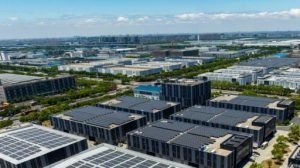
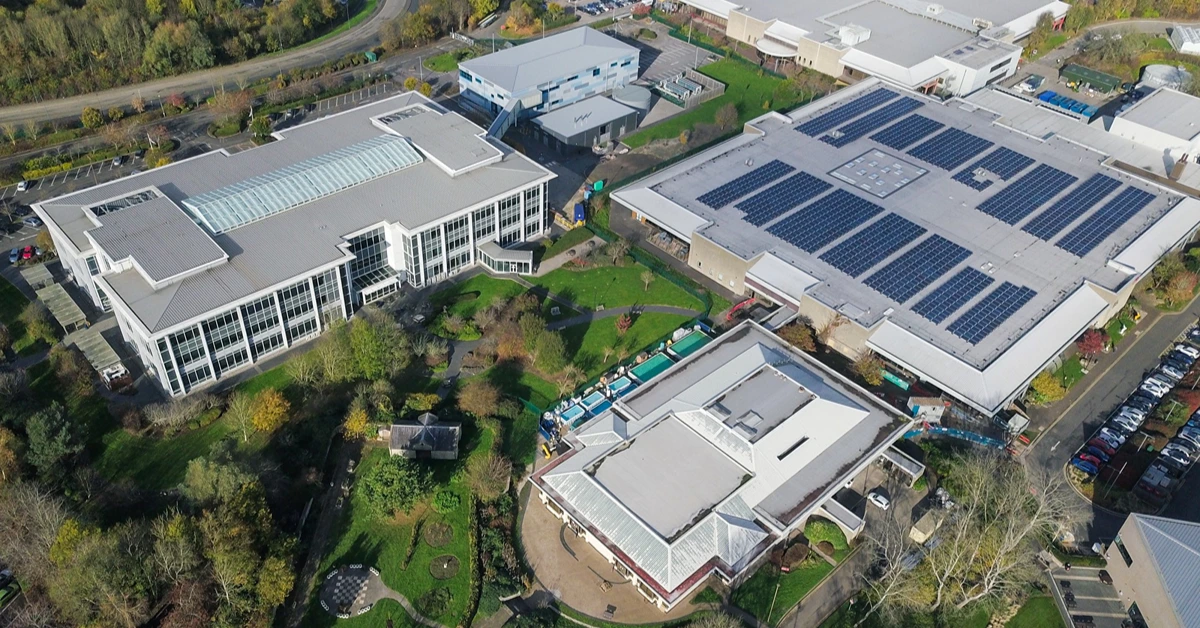
As the world shifts towards sustainable energy sources, solar power has emerged as a leading contender in the renewable energy sector. For industrial applications, both rooftop and ground-mounted solar systems offer viable solutions. This blog explores the efficiency of these systems in industrial settings, backed by reputable information.
Introduction
The industrial sector is a significant consumer of energy, and integrating solar power can substantially reduce operational costs and carbon footprints. Industrial solar installations can be categorized into two main types:
- Rooftop Solar Systems
- Ground-Mounted Solar Systems
Understanding the efficiency and suitability of each system is crucial for industries aiming to adopt solar energy.
Efficiency Factors in Industrial Rooftop Solar Systems
1. Optimal Use of Space
- Advantage: Utilizes existing rooftop space without the need for additional land.
- Consideration: The size and structural integrity of the roof limit the scale of the installation.
2. Reduced Transmission Losses
- Advantage: Proximity to the point of consumption minimizes energy loss during transmission.
- Consideration: Electrical infrastructure must support the integration of generated power.
3. Installation and Maintenance
- Advantage: Generally quicker and less expensive to install due to existing structures.
- Consideration: Maintenance can be challenging due to roof accessibility issues (on a rare case).
4. Efficiency Impact
- Shading: Nearby structures or equipment can cause shading, reducing efficiency.
- Heat: Rooftops can get hotter, potentially reducing panel efficiency.
Efficiency Factors in Industrial Ground-Mounted Solar Systems
1. Optimal Orientation and Tilt
- Advantage: Panels can be installed at the ideal angle and orientation to maximize sunlight exposure.
- Consideration: Requires land acquisition or utilization, which may be costly.
2. Scalability
- Advantage: Easier to scale up by adding more panels as space permits.
- Consideration: Larger installations may require more complex infrastructure.
3. Maintenance and Accessibility
- Advantage: Easier access for cleaning, repairs, and upgrades.
- Consideration: Exposed to ground-level risks like flooding or vandalism.
4. Efficiency Impact
- Tracking Systems: Can incorporate solar trackers to follow the sun’s path, increasing efficiency by 10-25% (source: National Renewable Energy Laboratory).
- Cooling: Better airflow around panels can reduce overheating, maintaining efficiency.
Comparative Analysis
| Factor | Rooftop Solar | Ground-Mounted Solar |
|---|---|---|
| Space Utilization | Uses existing space | Requires additional land |
| Installation Cost | Lower | Higher due to land and infrastructure |
| Maintenance | Potentially challenging | Easier access |
| Efficiency | May be less optimal | Can be maximized with tracking systems |
| Scalability | Limited by roof size | Highly scalable |
| Permitting | Simpler | May require extensive permits |
Case Studies and Statistics
- Global Trends: As of 2020, industrial rooftop solar installations accounted for a significant portion of distributed solar capacity globally (source: International Energy Agency).
- Efficiency Records: Ground-mounted systems with tracking have achieved efficiencies upwards of 25%, compared to fixed-mount rooftop systems averaging around 15-20% (source: Fraunhofer Institute for Solar Energy Systems).
Advantages and DisadvantagesRooftop Solar Advantages:
- Cost-effective installation
- Utilizes unused space
- Reduced transmission losses
Rooftop Solar Disadvantages:
- Limited scalability
- Potential structural limitations
- Sub-optimal panel orientation
Ground-Mounted Solar Advantages:
- Optimal panel placement
- Easier maintenance
- High scalability
Ground-Mounted Solar Disadvantages:
- Higher initial costs
- Requires land
- Potential environmental impact
Conclusion
Both rooftop and ground-mounted solar systems offer unique benefits for industrial applications. The choice between them depends on factors like available space, budget, energy needs, and long-term goals. While ground-mounted systems may offer higher efficiency due to optimal placement and the possibility of using tracking technology, rooftop systems provide a cost-effective way to harness solar energy without additional land requirements.
References
- International Energy Agency (IEA). Renewables 2020.
- National Renewable Energy Laboratory (NREL). Best Practices in Photovoltaic System Operations and Maintenance.
- Fraunhofer Institute for Solar Energy Systems. Photovoltaics Report.
Call to Action
Considering solar energy for your industrial operations?
Contact us to explore the most efficient and cost-effective solutions tailored to your needs.
“By adopting solar power, we can create a more resilient, sustainable energy future—one panel at a time.”